Top 5 Tips for Choosing the Best Solar Generator For You
Choosing the right Solar Generator is crucial for anyone looking to harness renewable energy. With various options available, understanding your needs is essential. A suitable solar generator can provide reliable power during emergencies or outdoor adventures. However, the wide range of features can be overwhelming. You might wonder which specifications matter most.
Consider factors like capacity and portability. Does it fit your lifestyle? Some generators are lightweight, perfect for camping. Others offer higher power output, suitable for home backup. But what if you choose one that doesn’t meet your demands? This could lead to frustration. Learning from others' experiences can offer insights into making a wise decision.
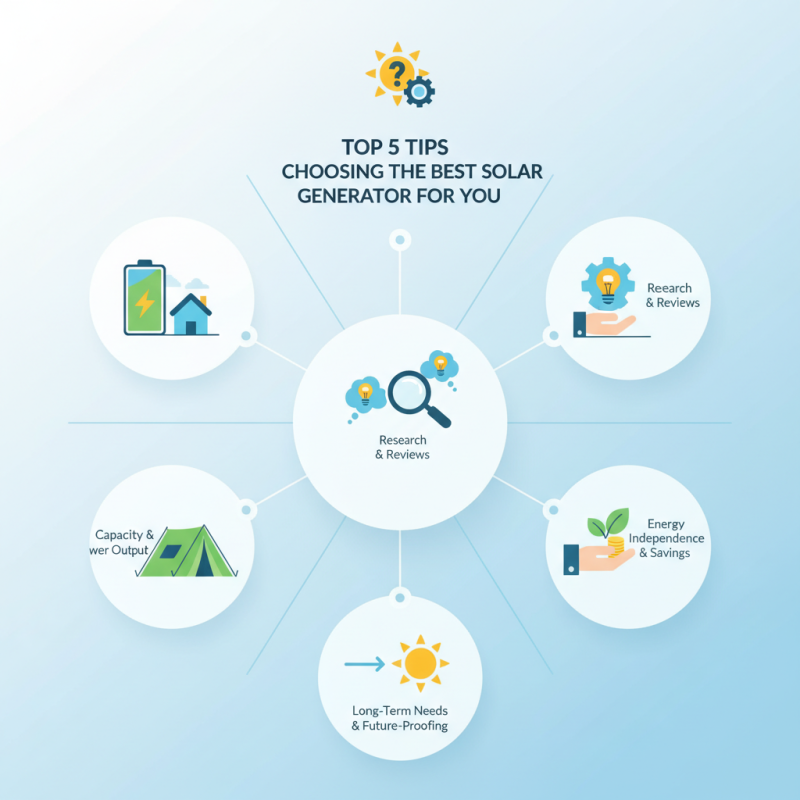
Researching brands and customer reviews will enhance your understanding. Reliable sources can guide your choice. Keep in mind that energy independence is a growing trend. A well-chosen solar generator can reduce your carbon footprint while saving money. Yet, it’s important to reflect on your long-term needs. Assessing the right fit requires thought. Let's explore the top tips for making an informed choice.
Understanding Your Power Needs for a Solar Generator
When considering a solar generator, understanding your power needs is crucial. According to the National Renewable Energy Laboratory, residential solar panel systems can produce anywhere from 5,000 to 10,000 watts on average. Knowing how much power you need helps in selecting the right solar generator.
Before you start shopping, assess your devices. Make a list of essential items you plan to power. Commonly used appliances like refrigerators, lights, and phones vary in power consumption. For instance, a refrigerator can use about 100-800 watts. Calculating the total wattage will guide your decision.
Tip: Choose a generator with a higher capacity than your total need. This provides a buffer, allowing for additional devices if necessary.
Power needs can fluctuate, so think about future requirements. A recent report by the Solar Energy Industries Association noted that many users underestimated their energy consumption. Many solar generators have varied wattage ratings. Hence, understanding your needs ensures sustainable energy use.
Tip: Monitor and adjust your consumption habits. Reducing unnecessary use can significantly extend the runtime of your solar generator.
Evaluating Battery Capacity and Type for Optimal Usage
When evaluating battery capacity for a solar generator, consider your energy needs. An ideal solar generator should provide enough power for your devices. Think about appliances you plan to use. Power requirements vary significantly between a smartphone and a refrigerator. Knowing this helps in choosing a suitable model.
Battery type also plays an essential role in performance. Lithium-ion batteries are common due to their efficiency and longevity. However, they can be expensive. Lead-acid batteries are a more affordable option but come with shorter lifespan and higher weight. Balancing cost and performance is key. You might find yourself stuck if you choose a battery that doesn't meet your needs.
Reflect on how often you'll use the generator. If it's for occasional camping trips, a smaller capacity may suffice. Daily use demands a more robust solution. Some users find that their initial choice falls short after a few uses. Understanding your own habits ensures you invest wisely in a solar generator.
Battery Capacity Comparison of Solar Generators
Considering Portability and Size for Your Solar Generator
When choosing a solar generator, portability and size are crucial factors. Many people overlook these aspects, focusing instead on power output. However, a lightweight generator can greatly enhance your outdoor experience. According to a report by the National Renewable Energy Laboratory, nearly 70% of users prioritize portability when selecting energy solutions for travel or emergencies.
Tip 1: Assess your typical usage scenarios. If you plan to take your generator on camping trips or tailgating, look for models under 50 pounds. Compact designs save space and make transportation easier. Many generators now offer folding handles and wheels for added convenience.
Tip 2: Evaluate battery capacity relative to size. Sometimes a smaller unit has a higher capacity due to advanced technology. Research indicates that lithium-ion models can provide more power in a smaller footprint. This can be a game-changer for those who need to maximize their energy output without sacrificing space.
Consider your power needs carefully. A portable unit that meets your requirements but also fits comfortably in your vehicle is essential. Not all solar generators are created equal; poor choices can lead to frustration. Balancing size, weight, and performance is key to finding the right fit for your lifestyle.
Assessing Solar Panel Efficiency and Compatibility
When choosing a solar generator, assessing solar panel efficiency and compatibility is crucial. Efficiency indicates how effectively solar panels convert sunlight into electricity. Higher efficiency means more power for your needs. Look for panels that perform well in various sunlight conditions. They should generate enough energy even on cloudy days. Examine their energy output ratings for informed decisions.
Compatibility is another vital aspect. Ensure the solar panels work seamlessly with your generator. Mismatched components can lead to suboptimal performance. Check specifications for voltage and wattage ratings. Some generators have limitations on the types of panels they can handle. Selecting the right combination can maximize energy production. Reflect on whether your power requirements match the system's capabilities.
Consider the material and build quality of the solar panels. Durable, weather-resistant panels provide longevity. Research warranties and product longevity for peace of mind. You might find that some options perform well initially but degrade quickly. Assess user reviews and expert opinions for reliability. This evaluation can help avoid potential mistakes and ensure a wise investment in sustainable energy.
Top 5 Tips for Choosing the Best Solar Generator For You - Assessing Solar Panel Efficiency and Compatibility
| Tip Number | Tip Description | Key Considerations | Recommended Solar Panel Type |
| 1 | Assess your power needs | Calculate total wattage required | Monocrystalline |
| 2 | Evaluate battery capacity | Look for higher amp-hour ratings | Lithium-ion |
| 3 | Consider portability | Weight and dimensions are key | Portable solar panel |
| 4 | Check inverter efficiency | Aim for at least 90% efficiency | Pure sine wave |
| 5 | Look for warranty and support | Comprehensive warranty coverage | Quality brand panels |
Checking Price, Warranty, and Customer Support Options
When considering a solar generator, price is a significant factor. Many models have varying costs based on features and capacity. It's essential to assess what you need versus what you can afford. Sometimes, a lower price might come with compromises, like less efficiency or shorter battery life. It's worth investing time in thorough research to find the balance between features and cost.
Warranty options also play a crucial role. A solid warranty reflects a manufacturer’s confidence in their product. Consider both the duration and coverage details. A longer warranty often indicates a reliable and durable generator. Customer support can be just as vital. Choosing a brand with responsive support teams ensures that help is available when needed. Responses might vary in quality, so check customer reviews for insights into their experience. These factors contribute to making a wise investment.

